Cultural Association - theologos
The History of Theologos
From ancient marble to the Ottoman capital of the island to today’s mountain village—a journey through the centuries.
Theologos
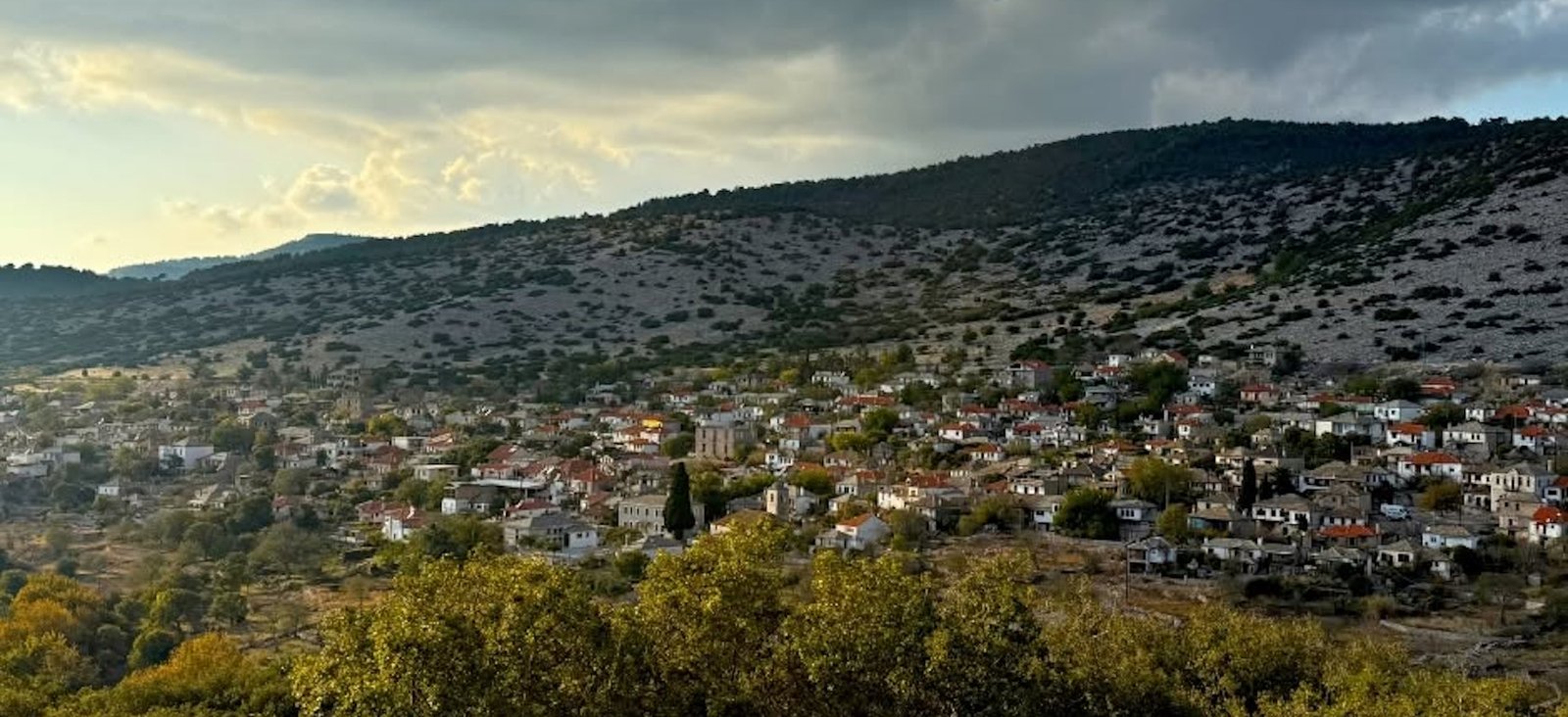
Theologos is located in the south of Thassos, nestled among mountains and olive groves. For centuries, the village was the economic and spiritual center of the island—its stone houses, narrow streets, and traditions still bear witness to this today.
Even in ancient times, Thassos was known for its marble, wine, and gold mines. Settlers from Paros founded their colony there, and the island's wealth attracted merchants from all over the Aegean.
“Anyone who walks through the alleys of Theologos is walking through the history of Thassos itself.” From the village chronicle
Theologos
The Hidden Soul of Thassos: Between Light, Stone, and Eternity
Jump directly to a section
Theologos at a Glance
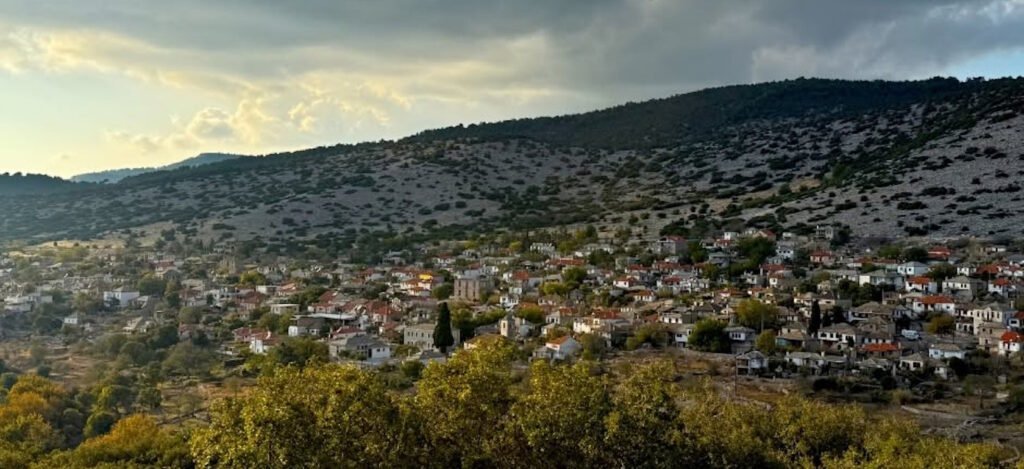
Theologos is one of the most important historical settlements on Thassos and was for a long time the island's administrative, political, and economic center. Its history begins as early as the 13th century, when it is mentioned as an area associated with the Philotheos Monastery on Mount Athos. It developed into an organized settlement during Ottoman rule, primarily due to migration from the coast as a result of pirate raids.
In the 18th and especially the 19th centuries, Theologos experienced significant economic, demographic, and cultural development. The cession of Thassos to Mehmet Ali (Egypt) in 1813 granted the island special administrative privileges, allowing Theologos to become the capital of Thassos and producing important figures in political and national history. Of particular importance was the participation of the inhabitants in the Greek Revolution of 1821 under the leadership of Metaxas Hatzigiorgis, as well as the village's crucial contribution to the political developments that ultimately led to the liberation of Thassos in 1912.
In modern times, the settlement of Theologos, in the municipality of Thassos, Kavala prefecture, was designated the historical seat of Thassos on January 29, 2004 (Official Gazette B' 240/09.02.2004). Theologos has preserved its traditional character and forms an important core of Thassos' cultural heritage. The Hatzigiorgis Educational and Cultural Association and the Folklore Museum play a crucial role in preserving historical memory, folk traditions, and local identity. At the same time, the region around Theologos, with its coastal settlements, is now one of the island's most important tourist destinations, combining history, culture, and modern development.
The educational and cultural association "Hatzigiorgis"
Founded in 1977, the Hatzigiorgis Educational and Cultural Association of Theologos on Thassos is dedicated to preserving the historical memory and cultural heritage of the region. It carries out various cultural and social projects, including publications, a library, blood drives, and events to support the local community. A key aspect of its work is the establishment and operation of the Theologos Folklore Museum, which preserves and showcases the local traditions. Simultaneously, the association strengthens the cultural life and international outlook of the region through events and collaborations.
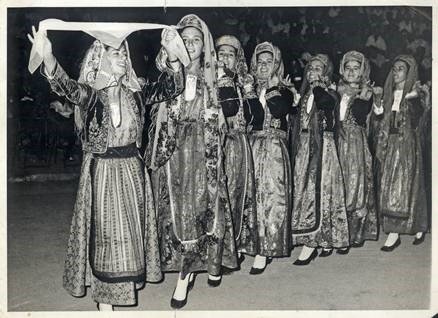
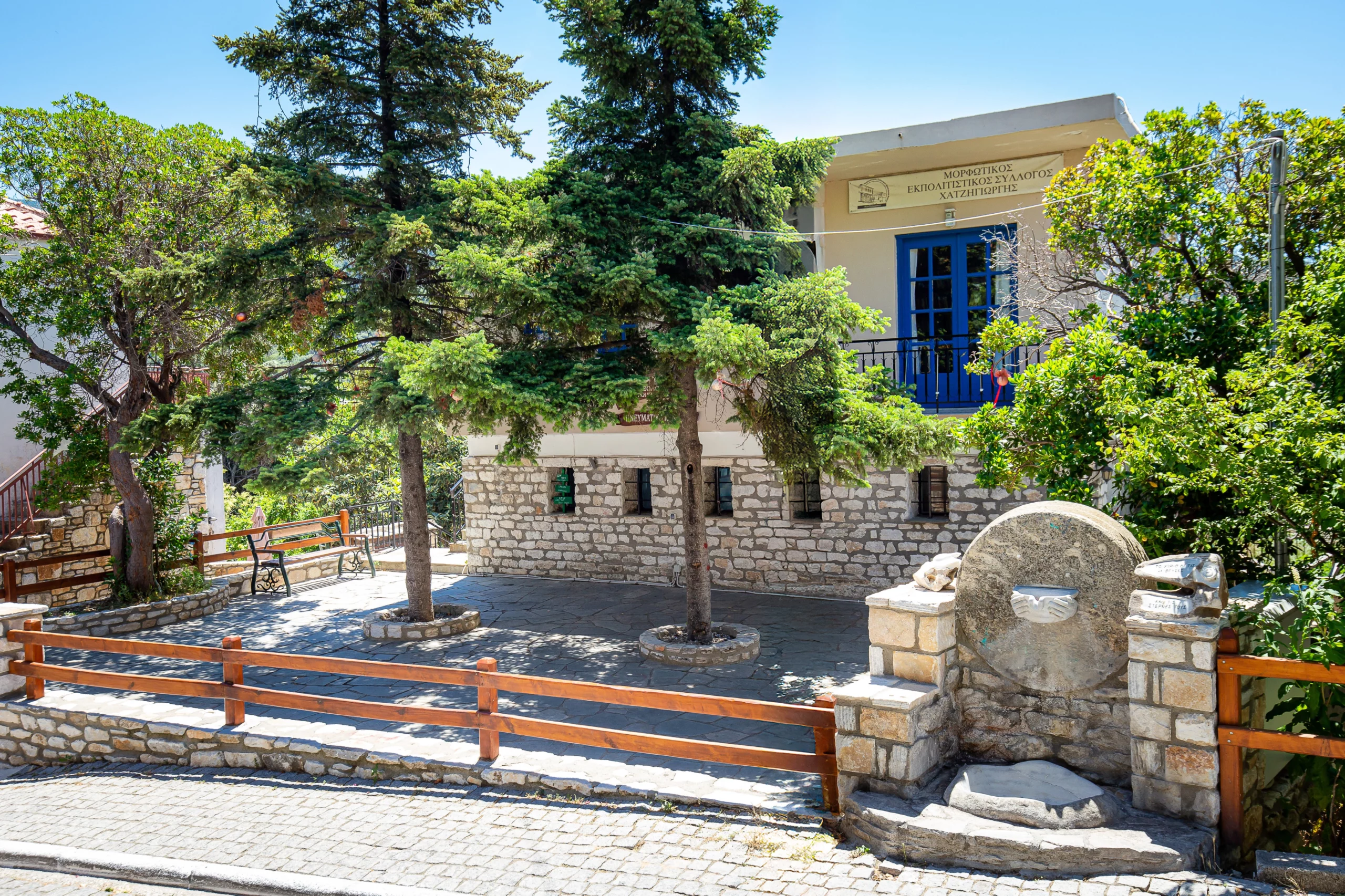 From the very beginning, the association's activities extended far beyond the boundaries of a purely cultural institution. It created a playground, equipped the rural health center with modern medical technology, established an organized blood donation group (which received an award from Kavala Hospital in 2005), and undertook initiatives that significantly improved the residents' quality of life. At the same time, it promoted the community through the publication of the magazine "Koufokastro," the establishment of a lending library, and the creation of traditional costumes for its dance group, thereby strengthening the participation of young people in cultural events.
Perhaps the association's most significant achievement is the founding and continuous development of the Theologos Folklore Museum. By collecting, recovering, and documenting authentic objects, traditional tools, costumes, family heirlooms, and historical documents, the association has preserved a valuable part of the town's collective memory. The restoration of the historic Hatzigiorgis Manor and the recent modernization of the museum have made it one of Thassos's most important cultural destinations, offering visitors a comprehensive picture of life in Theologos over the past centuries.
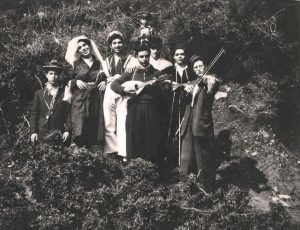
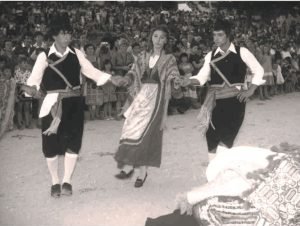
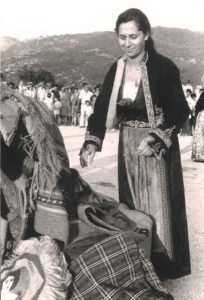
At the same time, the association maintains a continuous cultural program throughout the year. It organizes lectures, painting, web, and book exhibitions. The highlight is the Thassos Wedding, an institution that authentically revives local customs and has become an important event for the entire island. The association was also involved in co-organizing the Astrocamping event, developed collaborations with other cultural institutions, entered into a partnership with the Nea Karvali Cultural Center, and hosted international gatherings of traditional dances. In doing so, it strengthened Theologos' international focus and helped to promote the culture of Thassos beyond the island's borders.
Their contribution to preserving the village's cultural infrastructure is also significant. The association pioneered the renovation of the old community center, transforming it into a modern meeting and cultural center with exhibition spaces, a library, an event hall, and rooms for various activities. The ground floor houses permanent exhibitions, including a display of old photographs and the unique shell collection of physician Dimitrios Intze, while the upper floors contain the library, conference rooms, and the dance group's collections.
Beyond its activities and events, the association's greatest contribution lies in the continuous fostering of community spirit. With respect for history and a belief in the power of volunteerism, it continues to unite the inhabitants of Theologos around shared values, encourages young people to actively participate, and preserves the village's cultural identity. For visitors, the Hatzigiorgis Education and Culture Association is the primary communicator of Theologos's vibrant cultural tradition. Through its work, the village's history is not confined to books or museum displays, but lives on in the people, events, monuments, and initiatives that preserve the cultural heritage of the historic capital of the Thassos municipality.
The Folklore Museum of Theologos
3 The Folklore Museum of Theologos
The Folklore Museum of Theologos preserves and presents the history, daily life, and cultural heritage of Thassos through authentic artifacts and modern exhibits. Housed in the historic manor of Metaxas Hatzigiorgis, it showcases traditional living, occupations, weaving, watermills, and important figures of Theologos. Together with the traditional village, it offers visitors a comprehensive experience of the region's history and culture.
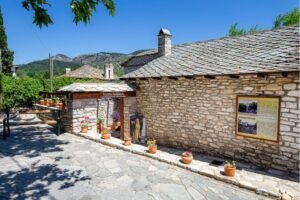 The Folklore Museum of Theologos is one of the most important places for preserving and promoting the cultural heritage of Thassos. It is not merely an exhibition space, but a living place of remembrance, telling the story, lifestyle, and daily life of the people of Theologos – a village that for over a century was the administrative, economic, and spiritual center of the island. A visit to the museum provides visitors with a comprehensive picture of the society that shaped the identity of southeastern Thassos and significantly contributed to its history.
The museum's creation is the result of years of dedicated effort by the Hatzigiorgis Educational and Cultural Association, which has been systematically committed to preserving local history and traditions since its founding in 1977. Through the collection of authentic objects, family heirlooms, tools, traditional costumes, and historical documents, as well as the restoration of the historic Hatzigiorgis manor house, the association has created a place where history comes alive. The recent modernization of the museum has further enhanced its educational and cultural character, making it a focal point not only for theologians but for the entire island of Thassos.
The museum's collections illuminate all aspects of traditional life. Visitors learn about the architecture of the Theologos' houses, family structures, traditional professions, agriculture and animal husbandry, weaving, olive production, and the inhabitants' everyday objects. The exhibits authentically convey a picture of a world based on cooperation, self-sufficiency, and creativity, while also reflecting the aesthetics, values, and social relationships of a thriving community. The traditional house, with its stone floors on the ground floor, wooden upper floors, loggias, and distinctive interior design, is a characteristic example of vernacular architecture from Thassos and the rest of Macedonia.
The museum also serves as a cultural and educational center. Through its permanent and temporary exhibitions, it expands the public's knowledge of the town's history. The exhibition spaces also host thematic presentations, such as displays of old photographs, which enrich the visitor experience and enhance the museum's cultural significance.
A visit can be ideally complemented by a guided tour of the traditional settlement of Theologos. The cobblestone streets, historic mansions, churches, stone bridges, and public squares, which have been preserved to this day, form a natural extension of the museum exhibits. Thus, all of Theologos transforms into an open-air museum, where visitors can connect the collection objects with the authentic space in which they were once used.
The Folklore Museum of Theologos is more than just an exhibition space; it preserves the collective memory and cultural identity of Thassos. Through the preservation of historical documents and its continuous cultural activities, it makes a significant contribution to connecting younger generations with their roots and offers visitors an authentic insight into the history, tradition, and culture of one of the island's most historically significant settlements.
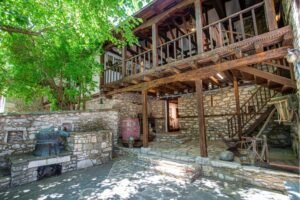 The building was divided into seven areas, and the exhibits into seven corresponding sections. Due to the slope of the land, it has two ground floors, a mezzanine, and an upper floor. The sections are:
- On the upper ground floor, we call it the "museum hall". Traditional instruments and embroidery are exhibited there.Links von der Halle befindet sich die Webstube (Raum mit traditionellen Webstühlen)
- To the left of the hall is the weaving room (room with traditional looms
- The mezzanine level, the so-called loggia, houses miniatures of watermills, which Theologos highlights as the “industrial” area of Thassos, particularly from the 18th to the middle of the 20th century.
- The room next to the loggia is the living room, which also served as a bedroom.
- On the first floor, the Onda, which we also call the “historical living room”, historical figures such as the mayor Metaxas Hatzigiorgis, the archimandrite Kallinikos Stamatiadis and Konstantinos Dimitriadis, whose work was enormous for the place, dominate alongside the exhibits.
- In the basement, under the loggia, on the right-hand side is the hall of ancient trades and their corresponding tools, which are reminiscent of the ancient trades of the inhabitants of Theologos.
- 1) Finally, a room was created on the ground floor next to the café in the courtyard, housing various items of work belonging to the residents that were in use until recently.
3.1 Historical Overview (Under construction)
3.2 Everyday life in the museum sector(Under construction)
3.3 Watermills(Under construction)
3.4 Rural life(Under construction)
3.5 Forestry work(Under construction)
3.6 Fireplaces(Under construction)
3.7 Getreidemühlen / Pressen (Im Bau)
3.8 Beekeeping – Beekeepers – Wax mills(Under construction)
3.9 Natural environment(Under construction)
Community and Cultural Center
The cultural center houses exhibition spaces, a library, and the association's activities. At the same time, it further promotes Theologos as an important historical site in the municipality of Thassos and strengthens the town's cultural identity.
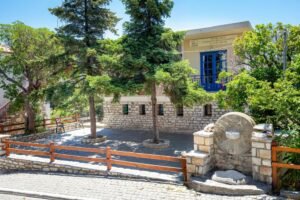 The Theologos-Potos Education and Culture Association, Thassos “Hatzigiorgis”, is the principal custodian of the historical memory and cultural heritage of Theologos. Since its founding on April 11, 1977, the association has consistently pursued two goals: firstly, the preservation and promotion of the history and folk traditions of the village, and secondly, active participation in the social and cultural development of the local community.
On January 29, 2004, the municipality of Theologos, part of the municipality of Thassos, was declared the historical seat of the municipality of Thassos (Official Gazette No. B 240/09/2004). The association and residents of Theologos have long demanded that Theologos should be the historical seat of the municipality of Thassos, not just in name, but in fact.
The meeting and cultural center to which we have voluntarily and consciously dedicated ourselves is not a space for political aspirations and goals, nor for economic or other individual and collective interests. It is a center that strives to encompass as many art forms as possible, to perceive as many spiritual stirrings as possible, and to feel and experience as many aspects of culture as possible.
In this context, the cultural association took the initiative to renovate parts of the old community center, which was temporarily leased from the municipality of Thassos, and founded the community and cultural center in 2009. In 2024, after the official leaseback by the municipality of Thassos, the entire building and the surrounding grounds will be completely renovated.
On the ground floor, which serves as an exhibition space, there is now an exhibition of old photographs and an original exhibition – one of the few in Greece – of shells belonging to the collector Dr. Dimitrios Intze, who donated them to the cultural association.
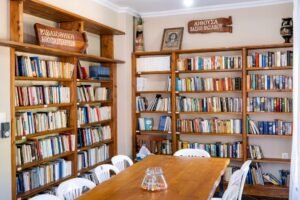 On the first floor of the building are the association's office, the room for storing the dance association's costumes, the library, the meeting and performance room, which we name after the ecumenical writer of our village, Vasilis Vasilikos.
Artistic activities
5.1 Dance departments(Under construction)
5.2 Painting(Under construction)
Your content goes here.
Edit or remove this text inline or in the module content settings.
You can also customize every aspect of this content in the module design settings, and even apply custom CSS to this text in the module advanced settings.
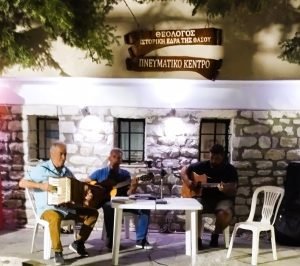
5.3 Music
History of the Theologian
6.1 Notable Figures of Theologos
Theologos highlighted important figures who made crucial contributions to the history of Thassos and Hellenism. Among these prominent figures were the revolutionary of 1821, Metaxas Hatzigiorgis; the archimandrite and philistine Kallinikos Stamatiadis; and the physician and intellectual Konstantinos Dimitriadis. Their work and contributions are kept alive through the Folklore Museum, the historical monuments, and the activities of the Hatzigiorgis Educational and Cultural Association. Visitors thus have the opportunity to encounter those who shaped the historical, spiritual, and cultural identity of Theologos and Thassos.
The history of Theologos is inextricably linked to the people who, through their actions and deeds, shaped not only the course of the village's history, but also the history of Thassos and the modern Greek state. As the island's administrative capital for over a century, Theologos produced political leaders, freedom fighters, clergy, scholars, and writers who contributed to shaping local and national history. Their presence remains an integral part of the settlement's cultural identity. The most prominent figures were:
HADZIGIORGIS METAXAS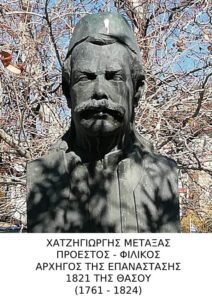
He came from an old patriarchal family of theologians. His father, Metaxas Dimitrios, had been appointed Bas Kotsambasis of all Thassos in 1779. After his death, he was succeeded by his son Anagnostoudis, who died in 1813. Anagnostoudis was then succeeded by his brother Hatzigiorgis (1813–1821).
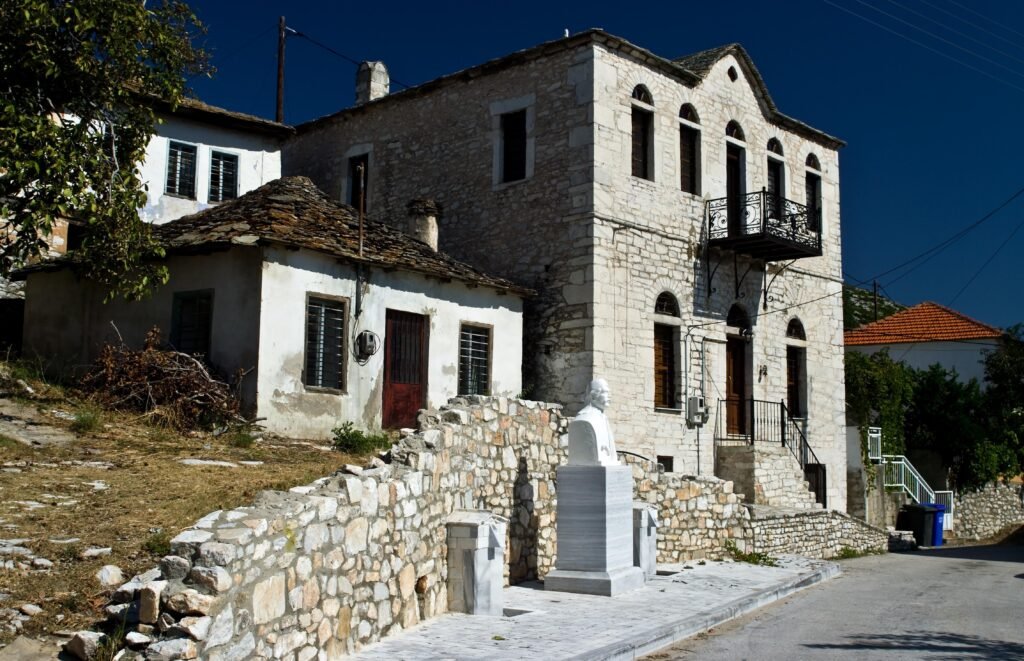
The new Egyptian government established the office of President of Thassos, making Hadjigiorgis Metaxas from Bas Kotzabasis the first president of the entire island. In 1813, he had his mansion built, which today houses our cultural association "Hadjigiorgis".
Hadjigiorgis was admitted to the Philiki Etaireia (secret society for the liberation of Greece from the Ottoman Empire) by Archimandrite Kallinikos Stamatiadis. In June 1821, he proclaimed the revolution on Thassos after armed fighters from the island of Psara landed in Astrida and marched to Theologos, the island's capital at the time. The liberation lasted six months. As the threat of reprisals persisted, Hadjigiorgis suggested to his countrymen that they take full responsibility for the uprising while he himself fled to Skyros and Tinos. He returned at the invitation of the Turkish commander, but it was a trap. When he landed in Saloupes, the dignitaries of Kazaviti advised him not to show his face, as it was dangerous. He then traveled to Egypt on the same ship, where he received a written pardon from Mehmet Ali. He returned to Thassos, but died soon afterwards, as evidenced by a document from 1825 in which he is mentioned as deceased.
ARCHIMANDRIT KALLINIKOS STAMATIADES 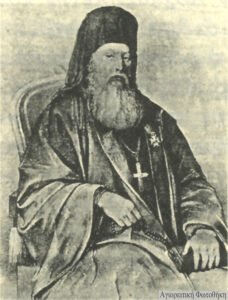
Archimandrite Kallinikos Stamatiadis from Thassos was among the chorus of fiery clergy of the national revival. He was born in Kazaviti on Thassos in 1792. He studied at the Athoniada school and was admitted to the Filiki Etaria. He played a leading role in the struggle for Chalkidiki, and the Ministry of War awarded him a silver coin on May 17, 1844, in recognition of his service in the War of Independence..
He survived the massacres in Chalkidiki and in 1830 we encounter him as vicar in Serres with the title of archimandrite. In the same year, he was elected and appointed vicar of the Church of Agios Georgios of the Greek community of Vienna. In 1838, he returned to Athens, where he worked as a teacher, and the following year taught in Gonia, Crete. After the outbreak of the Cretan Revolution, he returned to Athens.
In 1847, he was elected pastor of the church of the Greek community of Sotiros in Munich, where he arrived in February 1848. He remained there until his death in April 1877.
KONSTANTINOS DIMITRIADIS ODER HADZIGIAXIS
He was the son of Dimitrios Hadjigiaxis (or Dimitroudis) and Sotiros, the niece of Kallinikos Stamatiadis. He was born in 1850 in Theologos on Thassos. After graduating from high school, he went to Munich to study medicine near his uncle Kallinikos. He then returned to Thassos and succeeded his father as the village headman of Ano Theologos. His socialist ideas brought him into conflict with the ruling class of his village, who rebelled against him. To escape, he left his birthplace and settled in Limenas. He cultivated friendships with prominent figures such as Lytras, Gyzis, Chalepas, Nik Politis, and others. He declined both a professorship at the University of Athens and a position at the court of the Khedive (Prince) of Egypt. He was deeply attached to his homeland and did not want to leave his island. Since he remained unmarried, he bequeathed his entire fortune to the Association of Municipalities of Thassos. The Hatzigiorgis manor also belonged to him, and because he had many heirs, it was released and now houses the Hatzigiorgis Cultural Association. He died in 1930 in a hospital in Athens.
The historical legacy of these figures is preserved to this day. The Folklore Museum, historical publications, busts, listed manor houses, and the work of the "Hatzigiorgis" Educational and Cultural Association all contribute to preserving their memory and passing on their work to younger generations. By bearing the name Metaxas Hattzigiorgis itself, the association underscores the timeless importance of historical continuity and collective memory for the local community.
For visitors, the prominent figures of Theologos are not merely figures of the past. Through their homes, personal belongings, archival documents, and the stories preserved in the village and the folklore museum, the lives of those individuals come alive—people who, with their courage, knowledge, and dedication, significantly shaped the history of Thassos. Encountering these individuals allows for a deeper understanding of Theologos' identity as a place that has produced not only important historical events but also personalities who profoundly influenced the politics, education, and culture of Hellenism.
6.2 Geographical location and historical identity
Theologos, one of the oldest settlements on Thassos, developed into the island's administrative, economic, and cultural center in the 18th and 19th centuries and played a significant role in the 1821 revolution as well as in the modern history of Thassos. Today, as the historical seat of the municipality of Thassos, it retains its traditional appearance and is a living monument to the island's history and cultural heritage.
Theologos ist eine der ältesten und geschichtsträchtigsten Siedlungen Thassos und liegt im Südosten der Insel. Amphitheaterartig an den Hängen des Berges Ypsario auf einer Höhe von etwa 220 Metern erbaut, ist die Lage nicht zufällig gewählt: unweit des Meeres, aber geschützt durch Buchten und Küstenstreifen. Während der Jahrhunderte der Piraterie in der Ägäis verließen die Bewohner die Küstensiedlungen und siedelten sich im Inselinneren an. So entstand eine Siedlung, die Sicherheit, leichten Zugang zu Ackerland und eine gute Anbindung an die Küste bot, wo sich ihre Olivenhaine und Handelsaktivitäten befanden.
The history of Theologos stretches back over seven centuries. The first mentions of the area appear in 13th-century documents from the Philotheos Monastery on Mount Athos, while the present settlement gradually developed during Ottoman rule. According to historical sources and local tradition, the village consisted of three quarters: two Christian and one Turkish. The latter was separated from the other two by a large stream and was called Pano Maxalas (Upper Quarter) and Kato Mahalas (Lower Quarter), with the opposite side known as Pera Mahalas (Far-Side Quarter).
A turning point in Thassos' history came in 1813 when the Sultan ceded the island to Mehmet Ali of Egypt. The subsequent establishment of a special administration granted the islanders significant privileges and elevated Theologos to the administrative, economic, and political center of Thassos. As the seat of the Gerontodemontia (rule of the elders) and the residence of the island's first presidents, the settlement developed into a place where important decisions were made, experiencing impressive population growth as well as strong economic and intellectual development. The influx of wealthy and educated families from other regions further contributed to its prosperity and shaped the distinctive social and architectural character that the island retains to this day.
Theologos also occupies a special place in Greek national history. The 1821 revolution on Thassos began in this village under the leadership of Metaxas Hatzigiorgis, a member of the Filiki Eteria (secret society for the liberation of Greece from the Ottoman Empire) and the first president of Thassos. This historical legacy continues to shape the town's identity and inspire its modern cultural activities. At the same time, Theologos also played a significant role in the subsequent political and social developments that ultimately led to the island's liberation in 1912.
Today, Theologos is considered the historical seat of the municipality of Thassos, a fact that reflects its centuries-long contribution to the island's history and culture. Despite the development of coastal settlements, the town has retained its traditional character, with cobblestone streets, Macedonian-style mansions, churches, and public buildings that bear witness to its 19th-century heyday. The establishment of the Folklore Museum, the activities of the "Hatzigiorgis" Educational and Cultural Association, and the numerous cultural events contribute significantly to the preservation and promotion of this unique cultural heritage.
For today's visitor, Theologos is more than just a traditional settlement of exceptional aesthetic appeal. It is a place where natural landscape, history, architecture, and vibrant traditions combine to create an authentic experience. A stroll through the narrow streets, a visit to the historical monuments, and the folklore museum offer the opportunity to learn about the development of Thassos through this settlement, which for decades formed the center of the island's administrative, political, and cultural life.
6.3 The founding and development of the settlement
Theologos gradually developed from the Middle Ages onwards, as inhabitants moved from the coasts to the interior of Thassos for protection against pirate raids. With the cession of Thassos to Mehmet Ali of Egypt in 1813, the town experienced a golden age and became the administrative, economic, and cultural center of the island. Even today, it has retained its traditional character and is a living testament to the history and cultural heritage of Thassos.
The history of Theologos is a typical example of how geography, historical circumstances, and human activity shaped one of Thassos's most important settlements. The area's roots stretch far back into the past, as evidenced by archaeological finds that attest to human presence since prehistoric times. The first clear written record of Theologos dates back to 1287, when Byzantine documents from the Philotheos Monastery mention a metochi (church) dedicated to the Evangelist and theologian John, from whom the village is believed to derive its name.
Be that as it may, by 1950 almost the entire old village (Pera Mahalas) had been preserved; that is, the house walls were 1–1.5 meters high, and the inhabitants had converted the smallest areas, presumably old courtyards or rooms, into huts. There they cultivated various vegetables. By 1708, Theologos was demonstrably located at its present site and rapidly developed into a prosperous and large village. The inhabitants were never cut off from the coastal settlements where their properties, mostly olive groves, were located. The population grew steadily as new settlers from many other places arrived and settled permanently. From 1813 onward, immigration and the settlement of new inhabitants on Thassos increased significantly.
In the 18th century, Theologos developed into one of the largest and most economically important villages on Thassos. The steady influx of people from other parts of Macedonia, Thrace, and the Aegean enriched the settlement with individuals possessing trading experience, technical knowledge, and a high level of education. The development of agriculture, livestock farming, olive cultivation, and trade created a strong community that invested in the construction of mansions, schools, churches, and infrastructure, thus shaping the distinctive architectural character that has been preserved to this day.
A decisive turning point in the settlement's development came in 1813 when the Sultan of Thassos ceded the island to Mehmet Ali of Egypt. The subsequent introduction of a special administrative system granted the inhabitants significant privileges and strengthened local self-government, education, and economic development. Within this context, Theologos evolved into the island's administrative capital and the seat of Gerontodimontia (Rule of the Elders), where Thassos's most important political and economic institutions were located. This period is considered the island's golden age, characterized by strong population growth, economic prosperity, and spiritual flourishing.
The development of Theologos was not limited to economic and administrative growth. The organization of town districts (mahalades), the operation of two schools and two parishes, the work of important figures like Metaxas Hatzigiorgis, and the strong sense of community shaped a settlement with a distinctive cultural identity and a decisive influence on the history of Thassos. This character persisted even after the administrative center was moved to the coast, ensuring that Theologos remained an important point of reference for the island's historical memory.
Today, the traditional settlement is a living testament to the history of Thassos. The cobblestone streets, the Macedonian-style mansions, the churches, the stone bridges, and the public squares preserve the image of a time of great prosperity. Together with the Folklore Museum and the activities of the Hatzigiorgis Educational and Cultural Association, visitors can trace the development of a small mountain settlement that, thanks to its strategic location, the diligence of its inhabitants, and historical circumstances, grew over a century into the most important administrative, economic, and cultural center of Thassos.
6.4 1.1 The heyday and administrative role of Theologos
Theologos experienced its golden age from the 18th to the end of the 19th century, developing into the most important administrative, economic, and spiritual center of Thassos. Crucial to this was the cession of Thassos to Mehmet Ali of Egypt in 1813, who granted the island self-governing rights and established Theologos as its capital and administrative center. The prosperity of this period was reflected in its economic development, architecture, education system, and the presence of prominent figures such as Metaxas Hadjigiorgis. Although Theologos lost its administrative role at the beginning of the 20th century, it remains the historical and cultural center of Thassos to this day.
The period from the beginning of the 18th to the end of the 19th century is considered the golden age of Theologos, when the settlement developed into the most important administrative, economic, and spiritual center of Thassos. Its geographical location—protected from pirate raids and at the same time directly connected to the coast—as well as the diligence of its inhabitants and favorable political developments created the conditions for a long period of prosperity that lastingly shaped the history and architectural appearance of the town.
A turning point in the development of Theologos came in 1813 when the Sultan of Thassos ceded the island to Mehmet Ali of Egypt and organized it as a vakuf (foundation estate), thereby granting it a special status of administrative autonomy. The inhabitants received significant privileges, such as local self-government, a special tax system, organized education, communal forestry, and elected representatives. In this context, Theologos developed into the administrative center of the island and the place where the most important political and economic decisions were made. The first presidents of Thassos (Bas Tsorbatzides), including Metaxas Hadjigiorgis, Hadjigiannis, and Hadjistamatis, came from Theologos, demonstrating the settlement's dominant position in the public life of that era.
Theologos' administrative heyday coincided with impressive economic and demographic growth. The town attracted wealthy families, merchants, artisans, and educated individuals from various regions of Macedonia, Thrace, and the Aegean. Agriculture, olive cultivation, livestock farming, forestry, and trade formed the mainstays of the local economy. The inhabitants maintained close ties with the coastal towns of Potos and Astrida, where the cultivated fields and small ports for exporting their produce were located. This economic prosperity was reflected in the construction of large mansions, churches, schools, public buildings, and stone bridges, many of which survive today as outstanding examples of Macedonian vernacular architecture.
Theologos' administrative heyday coincided with impressive economic and demographic growth. The town attracted wealthy families, merchants, artisans, and educated individuals from various regions of Macedonia, Thrace, and the Aegean. Agriculture, olive cultivation, livestock farming, forestry, and trade formed the mainstays of the local economy. The inhabitants maintained close ties with the coastal towns of Potos and Astrida, where the cultivated fields and small ports for exporting their produce were located. This economic prosperity was reflected in the construction of large mansions, churches, schools, public buildings, and stone bridges, many of which survive today as outstanding examples of Macedonian vernacular architecture.
The relocation of the administrative center to the coast at the beginning of the 20th century, driven by the development of shipping, trade, and later mineral extraction, marked the end of Theologos' administrative preeminence. However, the loss of this role did not diminish its importance as the historical and cultural center of Thassos. On the contrary, the preservation of the traditional townscape, the mansions, and the public buildings from its heyday allowed the settlement to retain its historical appearance unchanged. Today, as a recognized traditional settlement and the historical seat of the municipality of Thassos, Theologos represents a unique living monument to the era when it was the political, economic, and cultural heart of the island.
6.5 Theologos and the national liberation struggles
Theologos played a leading role in the national liberation struggles of Thassos, culminating in its participation in the 1821 revolution under the leadership of Metaxas Hatzigiorgis. Its inhabitants also fought in the revolutionary movements of 1878 and 1897 and assumed a leading role in the mobilizations against the Egyptian administration in 1902. This development culminated in the liberation of Thassos in 1912, leaving Theologos a timeless legacy of struggle, kept alive through its historical monuments and folklore museum.
The history of Theologos is inextricably linked to the national struggles of the Hellenistic period. Thanks to its administrative role as the capital of Thassos in the 19th century, and also due to the high level of education and social standing of its inhabitants, the settlement developed into a center of political activity, national awakening, and resistance against Ottoman rule. The initiatives that originated in Theologos significantly shaped not only the course of Thassos' history, but also the island's participation in the major national struggles of modern Greece.
A pivotal moment in the village's history was the Greek Revolution of 1821. The driving force behind the uprising on Thassos was Metaxas Hatzigiorgis, President of Thassos, a member of the Filiki Eteria, and one of the most prominent figures of the time. At the suggestion of Archimandrite Kallinikos Stamatiadis, he convened a meeting of candidates at his manor in Theologos, and it was decided that Thassos should join the revolution. With the help of ships from the island of Psara and volunteers, the revolutionaries occupied the Turkish positions on the island and forced the Ottomans to temporarily withdraw.
Despite initial enthusiasm, the revolution failed to gain traction on Thassos. The island's geographical isolation and the strong Ottoman presence on the opposite coast led to the suppression of the uprising within a few months. The consequences were particularly severe: many Thasians were killed or forced to flee the island, property was destroyed, and some fighters continued the struggle in southern Greece. Hatzigiorgis himself initially fled to Syros, Tinos, and later to Egypt, but returned to Theologos shortly before his death. Nevertheless, Thassos's participation in the 1821 revolution represents a unique example of an armed uprising in Eastern Macedonia and made Theologos the center of the revolutionary movement in the northern Aegean.
The national commitment of the Theologians was not limited to 1821. Throughout the 19th century, the villagers volunteered in the revolutionary movements of 1878, 1897, and 1904, thus intensifying the struggle for the liberation of the unfree Greek territories. At the same time, Theologos was the epicenter of resistance against the arbitrary rule of the Egyptian administration that had assumed control of Thassos. In 1902, the inhabitants spearheaded mass mobilizations to defend the island's administrative privileges. The bloody suppression of the demonstrations, in which three residents of Theologos lost their lives, marked a turning point in the inhabitants' relationship with the administration and accelerated the political developments that ultimately led to the overthrow of the Egyptian regime.
The long struggle culminated in the liberation of Thassos on October 18, 1912, during the First Balkan War, when the Greek fleet incorporated the island into the Greek state. For the inhabitants of Theologos, this liberation represented the historic culmination of a century filled with battles, sacrifices, and demands.
Even today, the memory of these events remains vivid in Theologos. The Hatzigiorgis Manor, which houses the Folklore Museum, the bust of the fighter in the central square, the history of the Hatzigiorgis Educational and Cultural Association, and the preservation of historical monuments all serve as reminders that the settlement was not only the administrative center of Thassos, but also a place where initiatives originated that contributed significantly to the national struggles of the Hellenistic period. Theologos offers visitors the opportunity to learn about an important, yet lesser-known, chapter of the Greek Revolution and the modern history of Macedonia – in a place where history is still palpable.
6.6 From the 20th century to the present day
The 20th century brought significant changes to Theologos. After the liberation of Thassos in 1912, the town's administrative and economic role gradually shifted to the coastal settlements, while it preserved its historical and cultural character. Despite the difficulties of the Bulgarian occupation and post-war migration, Theologos, thanks in large part to the Hatzigiorgis Educational and Cultural Association and the Folklore Museum, developed into an important traditional and cultural destination. Today, it is the historical seat of the municipality of Thassos and one of the island's most authentic traditional settlements, where history and tradition are alive.
The 20th century marked a time of profound change for Theologos. From being the administrative and political center of Thassos, the historic settlement gradually adapted to the new economic and social realities without losing its historical identity. Although the shift of the administrative and economic focus to the coastal towns diminished its central role, Theologos remained the most important point of reference for the island's history, tradition, and culture.
The first major breakthrough came with the liberation of Thassos on October 18, 1912, during the First Balkan War, and the island's incorporation into the Greek state. This development ended centuries of Ottoman and Egyptian rule and ushered in a new era of administrative and economic change. Gradually, coastal towns like Potos and Limenas gained importance as the development of maritime transport, trade, and later tourism shifted economic activity from the mountainous interior to the coast.
During World War II, Thassos was occupied by Bulgarian troops (1941–1944), a difficult time that also severely affected Theologos. The inhabitants suffered from the deprivations of war, requisitions, and economic hardship. After liberation, a period of reconstruction followed. As in many mountainous regions of Greece, the postwar period was characterized by internal and long-distance migration, leading to a decline in population and the gradual disappearance of some traditional activities.
Since the 1960s, and especially after 1970, tourism development has transformed the economic landscape of Thassos. The coastal towns of Theologos – such as Potos, Pefkari, Psili Ammos, Astris, Aliki, and Kinira – have become major tourist destinations, creating new employment opportunities for residents. At the same time, Theologos itself has retained its traditional character and continues to thrive on agriculture, olive cultivation, livestock farming, and hospitality for visitors seeking an authentic experience of the Thassos hinterland.
A crucial factor in preserving the village's historical appearance was its recognition as a traditional settlement in 1979. Furthermore, Theologos was named the cultural capital of Thassos in 2004. These accolades contributed to the protection of the traditional architecture, cobblestone streets, mansions, and historical monuments, ensuring that development would proceed with respect for the cultural heritage.
Equally important was the contribution of the Hatzigiorgis Educational and Cultural Association, which has been undertaking initiatives to preserve the historical memory of Theologos since 1977. The founding of the Folklore Museum, the restoration of the historic Hatzigiorgis Manor, the creation of exhibition spaces, the collection of historical documents, and the organization of cultural events have been crucial in establishing the site as a significant cultural destination. At the same time, events such as the reenactment of the Thassite wedding and exhibitions on local history and folk art keep traditions alive and strengthen the connection between the local population and their past.
Theologos is today the historical seat of the municipality of Thassos and one of the most authentic traditional settlements in the northern Aegean. Despite the changes brought about by modern lifestyles, it has preserved its distinctive architecture, cultural heritage, and the deep connection its inhabitants have with the land and its traditions. For visitors, Theologos is not just a beautiful mountain village, but a vibrant place of history where past and present interact in creative ways. A stroll through the cobblestone streets, a visit to the Folklore Museum, and participation in cultural events offer a comprehensive insight into the development of a village that has successfully transformed its historical heritage into a valuable part of its modern identity.
6.7 Historical testimonies and evidence
Theologos boasts a rich and well-documented history based on Byzantine and Ottoman documents, archaeological finds, and oral traditions. The first written records date back to 1287. The monuments, mansions, cobblestone streets, and historical archives reflect the settlement's development and its importance as the administrative center of Thassos. Today, the Folklore Museum and the Hatzigiorgis Cultural and Educational Association preserve and showcase this valuable historical heritage.
The history of Theologos is not only based on local tradition and the collective memory of its inhabitants, but is also documented by a wealth of written sources, archaeological finds, historical documents, and material remains spanning over seven centuries. These documents allow for the reconstruction of the settlement's development and confirm the significant role Theologos played in the history of Thassos.
The oldest known written records date from 1287, when an imperial bull of Emperor Andronikos II Palaiologos states that the Holy Monastery of Philotheos possessed a metochi (monastic estate) on the site of the present settlement, dedicated to the Evangelist and Theologian John. This reference represents the oldest reliable evidence for the existence of an organized settlement in this area and likely explains the origin of the name "Theologos." Several decades later, in 1384, new documents from the same monastic tradition, as well as the wills of Byzantine rulers, confirm the continued presence and importance of the area.
The Ottoman censuses of the 15th and 16th centuries constitute the second important category of historical sources. They document that Theologos gradually developed into a larger village with two settlements (the "Upper Town" and the "Lower Town"), two parishes, two schools, and an organized municipal administration. This data reflects the demographic and economic development of the settlement and explains why it later became the administrative capital of Thassos.
Equally significant are the archaeological and architectural remains that have survived to this day. The remnants of the old settlement "Pera Machala" (Other Quarter), the stone bridges, the traditional watermills, the cobblestone streets, and the 18th- and 19th-century churches and mansions are vivid witnesses to the development of Theologos. The traditional architecture, with its stone and wooden floors and characteristic loggias, reflects the economic prosperity of the time when the settlement was the administrative and economic center of the island. At the same time, archaeological research in the surrounding area has unearthed traces of prehistoric settlement and necropolises, proving that human presence existed in this area centuries before the founding of the medieval settlement.
Archival documents, church registers, private letters, notarial deeds, family photographs, and oral traditions of the inhabitants also occupy an important place among the historical records. This material has been largely preserved thanks to the dedication of the "Hatzigiorgis" Education and Culture Association, which has been collecting, documenting, and archiving valuable sources on the village's history since 1977. A portion of this material is now on display in the Theologos Folklore Museum, where everyday objects, family heirlooms, traditional costumes, and tools complement the written sources and illustrate the lives of the inhabitants over the centuries.
The value of these records extends far beyond local interest. Through the combined analysis of Byzantine documents, Ottoman censuses, archaeological finds, and modern historical archives, Theologos proves to be one of the best-documented historical settlements on Thassos. For visitors, these documents transform a visit to the village and museum into an authentic encounter with history: every cobblestone street, every mansion, every document, and every exhibit is part of the timeless narrative of a place that has preserved its historical continuity from Byzantine times to the modern era.
6.8 Architecture (churches, chapels, springs and wells, settlements – their archaeological history)(Under construction)
6.9 Festivals(Under construction)
6.10 Place names, hiking trails, idioms (local dialect), legends(Under construction)
6.11 Lieder und Musik von Theologos (Im Bau)
6.12 Costumes and textiles(Under construction)
Historische Entwicklung von Thassos
Von der thrakischen Zeit bis heute
~1000 v. Chr.
Thrakische Zeit
Die Insel wird von thrakischen Stämmen bewohnt, die Landwirtschaft, Viehzucht und den Abbau von Gold-, Silber- und Marmorvorkommen betreiben.
~680 v. Chr.
Kolonisation durch Paros
Siedler von der Insel Paros gründen die Stadt Thassos und machen die Insel zu einem bedeutenden Handels- und Seefahrtszentrum der nördlichen Ägäis.
6.–5. Jh. v. Chr.
Zeit der grössten Blüte
Die Gold- und Silberminen, der berühmte weisse Marmor sowie der Handel mit den griechischen Kolonien an der thrakischen Küste bringen der Insel Reichtum und Macht.
463 v. Chr.
Konflikt mit Athen
Der wirtschaftliche Aufschwung von Thassos führt zum Konflikt mit Athen. Nach der Niederlage verliert die Insel einen grossen Teil ihrer politischen und wirtschaftlichen Autonomie.
4. Jh. v. Chr.
Makedonische Herrschaft
Die Insel gerät unter die Herrschaft des makedonischen Königreichs von Philipp II. und später Alexanders des Grossen.
168 v. Chr.
Römisches Reich
Thassos wird Teil des Römischen Reiches und erlebt eine lange Periode relativer Stabilität und Wohlstand. In dieser Zeit verbreitet sich auch das Christentum.
Byzantine Period
Byzantiner, Venezianer, Gattilusio
Nach der Teilung des Römischen Reiches wird Thassos Teil des Byzantinischen Reiches. Die Insel erleidet Piratenüberfälle, bleibt aber ein wichtiges religiöses und wirtschaftliches Zentrum. Nach dem Vierten Kreuzzug geht die Herrschaft nacheinander an Byzantiner, Venezianer und die genuesische Familie Gattilusio über.
1455–1912
Osmanische Herrschaft
Die Insel steht unter osmanischer Herrschaft, behält aber zeitweise bedeutende Verwaltungs- und Steuerprivilegien. Die Wirtschaft stützt sich auf Olivenanbau, Weinbau, Bienenzucht, Fischerei und Marmorabbau. Viele der heutigen Bergdörfer entstehen in dieser Zeit.
1912
Eingliederung in Griechenland
Während des Ersten Balkankriegs wird Thassos von der griechischen Kriegsmarine befreit und in den griechischen Staat eingegliedert.
1941–1944
Bulgarische Besatzung
Im Zweiten Weltkrieg erlebt die Insel die bulgarische Besatzung. Nach dem Krieg wandern viele Bewohner von Thassos nach Deutschland, Australien und Nordamerika aus.
1960 – heute
Tourismus und moderne Wirtschaft
Der Tourismus entwickelt sich zur wichtigsten Säule der Wirtschaft. Die Entdeckung des Erdölfelds von Prinos in den 1970er Jahren verleiht der Region eine neue wirtschaftliche Bedeutung. Heute basiert die Wirtschaft der Insel vor allem auf Tourismus, Marmorabbau, Olivenölproduktion und Fischerei, während die Insel im Mittelpunkt der Diskussion über die geplante CO2-Speicherung im erschöpften Erdölfeld von Prinos steht.
Historical timeline of Thasos
From the Thracian era to the present day
~1000 BC
Thracian era
The island is inhabited by Thracian tribes, who engage in agriculture, animal husbandry, and the exploitation of gold, silver, and marble deposits.
~680 BC
Colonisation from Paros
Settlers from the island of Paros found the city of Thasos, turning the island into a major trading and maritime centre of the northern Aegean.
6th–5th c. BC
Period of greatest prosperity
The gold and silver mines, the famous white marble, and trade with the Greek colonies of the Thracian coast bring great wealth and power to the island.
463 BC
Conflict with Athens
The island's economic growth leads to conflict with Athens. Following its defeat, Thasos loses a significant part of its political and economic autonomy.
4th c. BC
Macedonian rule
The island comes under the rule of the Macedonian kingdom of Philip II and later Alexander the Great.
168 BC
Roman Empire
Thasos becomes part of the Roman Empire and enjoys a long period of relative stability and prosperity. Christianity also spreads during this time.
Byzantine period
Byzantines, Venetians, Gattilusio
After the division of the Roman Empire, Thasos becomes part of the Byzantine Empire. The island suffers pirate raids but remains an important religious and trading centre. After the Fourth Crusade, rule passes successively to the Byzantines, the Venetians, and the Genoese Gattilusio family.
1455–1912
Ottoman rule
The island comes under Ottoman rule, at times retaining significant administrative and tax privileges. The economy relies on olive cultivation, viticulture, beekeeping, fishing, and marble quarrying. Many of today's mountain villages develop during this period.
1912
Union with Greece
During the First Balkan War, Thasos is liberated by the Greek Navy and incorporated into the Greek state.
1941–1944
Bulgarian occupation
During the Second World War, the island experiences Bulgarian occupation. After the war, many Thasians emigrate to Germany, Australia, and North America.
1960 – present
Tourism and the modern economy
Tourism develops into the most important pillar of the island's economy. The discovery of the Prinos oil field in the 1970s gives the wider region a new economic dimension. Today the island's economy relies mainly on tourism, marble quarrying, olive oil production, and fishing, while the island is also at the centre of discussions over the planned storage of CO2 in the depleted Prinos field.
Ιστορική χρονογραμμή της Θάσου
Από τη θρακική εποχή έως σήμερα
~1000 π.Χ.
Θρακική εποχή
Το νησί κατοικείται από θρακικά φύλα, τα οποία ασχολούνται με τη γεωργία, την κτηνοτροφία και την εκμετάλλευση των κοιτασμάτων χρυσού, αργύρου και μαρμάρου.
~680 π.Χ.
Αποικισμός από την Πάρο
Άποικοι από την Πάρο ιδρύουν την πόλη της Θάσου, μετατρέποντας το νησί σε σημαντικό εμπορικό και ναυτικό κέντρο του βορείου Αιγαίου.
6ος–5ος αι. π.Χ.
Περίοδος μεγάλης ακμής
Τα μεταλλεία χρυσού και αργύρου, το περίφημο λευκό μάρμαρο και το εμπόριο με τις ελληνικές αποικίες της θρακικής ακτής φέρνουν πλούτο και ισχύ στο νησί.
463 π.Χ.
Σύγκρουση με την Αθήνα
Η οικονομική ανάπτυξη της Θάσου οδηγεί σε σύγκρουση με την Αθήνα. Μετά την ήττα της, το νησί χάνει σημαντικό μέρος της πολιτικής και οικονομικής του αυτονομίας.
4ος αι. π.Χ.
Μακεδονική κυριαρχία
Το νησί περνά υπό την κυριαρχία του μακεδονικού βασιλείου του Φιλίππου Β΄ και αργότερα του Μεγάλου Αλεξάνδρου.
168 π.Χ.
Ρωμαϊκή Αυτοκρατορία
Η Θάσος εντάσσεται στη Ρωμαϊκή Αυτοκρατορία και απολαμβάνει μακρά περίοδο σχετικής σταθερότητας και ευημερίας. Την εποχή αυτή εξαπλώνεται και ο χριστιανισμός.
Βυζαντινή περίοδος
Βυζαντινοί, Ενετοί, Γατελούζοι
Μετά τη διαίρεση της Ρωμαϊκής Αυτοκρατορίας, η Θάσος εντάσσεται στη Βυζαντινή Αυτοκρατορία. Υφίσταται επιδρομές πειρατών, αλλά παραμένει σημαντικό θρησκευτικό και εμπορικό κέντρο. Μετά τη Δ΄ Σταυροφορία, η κυριαρχία περνά διαδοχικά σε Βυζαντινούς, Ενετούς και στη γενουατική οικογένεια των Γατελούζων.
1455–1912
Οθωμανική κυριαρχία
Το νησί βρίσκεται υπό οθωμανική κυριαρχία, διατηρώντας κατά διαστήματα σημαντικά διοικητικά και φορολογικά προνόμια. Η οικονομία στηρίζεται στην ελαιοκαλλιέργεια, την αμπελουργία, τη μελισσοκομία, την αλιεία και την εξόρυξη μαρμάρου. Πολλά από τα σημερινά ορεινά χωριά αναπτύσσονται αυτή την περίοδο.
1912
Ενσωμάτωση στην Ελλάδα
Κατά τον Α΄ Βαλκανικό Πόλεμο, η Θάσος απελευθερώνεται από το Ελληνικό Πολεμικό Ναυτικό και ενσωματώνεται στο ελληνικό κράτος.
1941–1944
Βουλγαρική κατοχή
Στον Β΄ Παγκόσμιο Πόλεμο το νησί γνωρίζει τη βουλγαρική κατοχή. Μετά τον πόλεμο, πολλοί Θάσιοι μεταναστεύουν στη Γερμανία, την Αυστραλία και τη Βόρεια Αμερική.
1960 – σήμερα
Τουρισμός και σύγχρονη οικονομία
Ο τουρισμός εξελίσσεται στον σημαντικότερο πυλώνα της οικονομίας. Η ανακάλυψη του κοιτάσματος πετρελαίου του Πρίνου τη δεκαετία του 1970 δίνει νέα οικονομική διάσταση στην περιοχή. Σήμερα η οικονομία βασίζεται στον τουρισμό, την εξόρυξη μαρμάρου, την παραγωγή ελαιολάδου και την αλιεία, ενώ το νησί βρίσκεται στο επίκεντρο της συζήτησης για τη σχεδιαζόμενη αποθήκευση CO2 στο εξαντλημένο κοίτασμα του Πρίνου.
today
A Living Tradition
The cultural association preserves this heritage—in the museum, through the dance group, and at the village festivals. Come visit us and experience the history of Theologos up close.